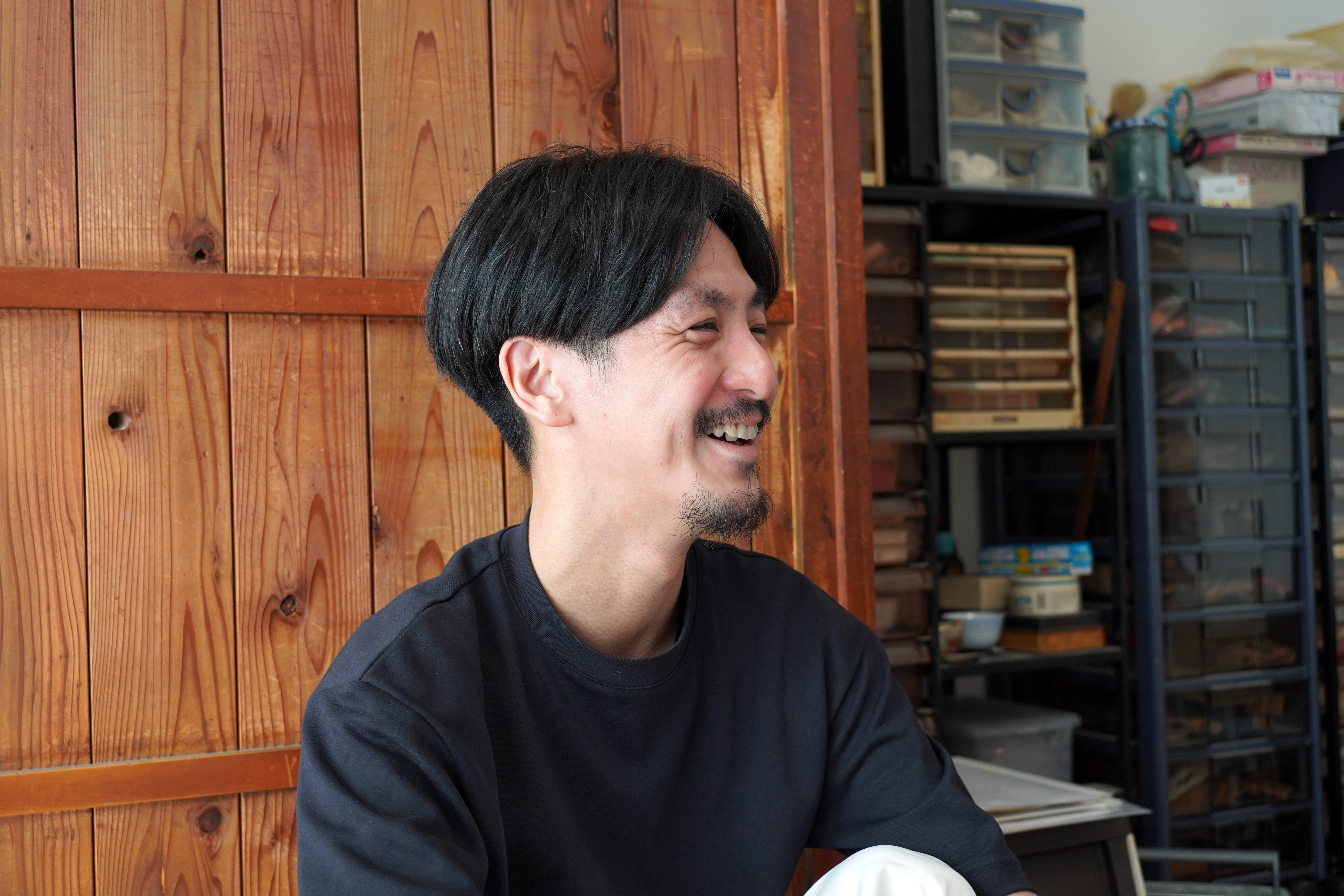

Kazuyuki Yoshikawa
In Takaoka, a town where tradition and innovation intersect, a young makie-shi (lacquer artist specializing in decorative techniques) carries on techniques passed down since the Edo period. Kazuyuki Yoshikawa entered the world of urushi (Japanese lacquer) with the tools inherited from his father. “Beauty resides in time and effort”—so he states, and his works, where the luster of urushi and the ephemeral white of eggshell quietly harmonize, reveal a unique expression that lingers in the memory of those who encounter them. His dedication to materials and techniques permeates every detail; work proceeds quietly in the late hours of the night, when no dust stirs. Currently, as a torchbearer of traditional industries, he is deeply involved in the community, dedicating himself to activities that connect techniques and culture to the next generation.
- 01Location01
- Takaoka, Japan
In Takaoka, a town where tradition and innovation intersect, a young makie-shi (lacquer artist specializing in decorative techniques) carries on techniques passed down since the Edo period. Kazuyuki Yoshikawa entered the world of urushi (Japanese lacquer) with the tools inherited from his father. “Beauty resides in time and effort”—so he states, and his works, where the luster of urushi and the ephemeral white of eggshell quietly harmonize, reveal a unique expression that lingers in the memory of those who encounter them. His dedication to materials and techniques permeates every detail; work proceeds quietly in the late hours of the night, when no dust stirs. Currently, as a torchbearer of traditional industries, he is deeply involved in the community, dedicating himself to activities that connect techniques and culture to the next generation.
- 01Location01
- Takaoka, Japan
Philosophy
The thought, “Will my father’s techniques cease to exist? Will these tools eventually be discarded?” sparked a sense of crisis, giving rise to a mission to inherit his skills. He finds the allure of makie (lacquerware decorated with sprinkled metal powders) in its ability to “reveal various expressions depending on the light and viewing angle,” drawn to its profound depth and diversity.
Among urushi decorative techniques, he excels at makie, using gold, silver, and mother-of-pearl to create diverse designs.
As urushi inherently lacks white pigment, he incorporates a technique called rankaku-nuri (eggshell inlay), utilizing quail eggshells. This technique not only employs the white of the egg to create patterns but also leverages its natural cracks to express a delicate, ephemeral texture.
Furthermore, to avoid the effects of dust and wind during creation, he often works late into the night.
While continually refining his skills as a makie-shi, he also dedicates himself to activities that look toward the future of traditional industries. As the 46th chairman of the Takaoka Traditional Industry Youth Association, he engages in exchanges with other production regions and technical collaborations, addressing the challenge of a shortage of successors in traditional industries.
He also promotes the appeal of Takaoka’s craftsmanship through sustainable events that can be enjoyed by generations from youth to parents.
Philosophy
Makie-shi Kazuyuki Yoshikawa, driven by a profound sense of mission that “if I do not carry on these traditional techniques, they will vanish,” strives daily to convey their allure to the next generation.
Captivated by the beauty of urushi, which alters its expression with changes in light and angle, he continues to create works that infuse traditional techniques with his unique sensibility.
He maintains meticulous attention to detail, particularly in his use of rankaku-nuri for white expression and his practice of working late into the night to avoid dust.
Beyond honing his craft, he also acts as a bridge between the community and industry, looking toward the future of Takaoka’s traditional crafts, engaging in planning and management that involves younger generations in creation, and thus, weaving together tradition and innovation to forge new possibilities for makie.